


What Is Negative Pressure Wound Therapy (NPWT)? 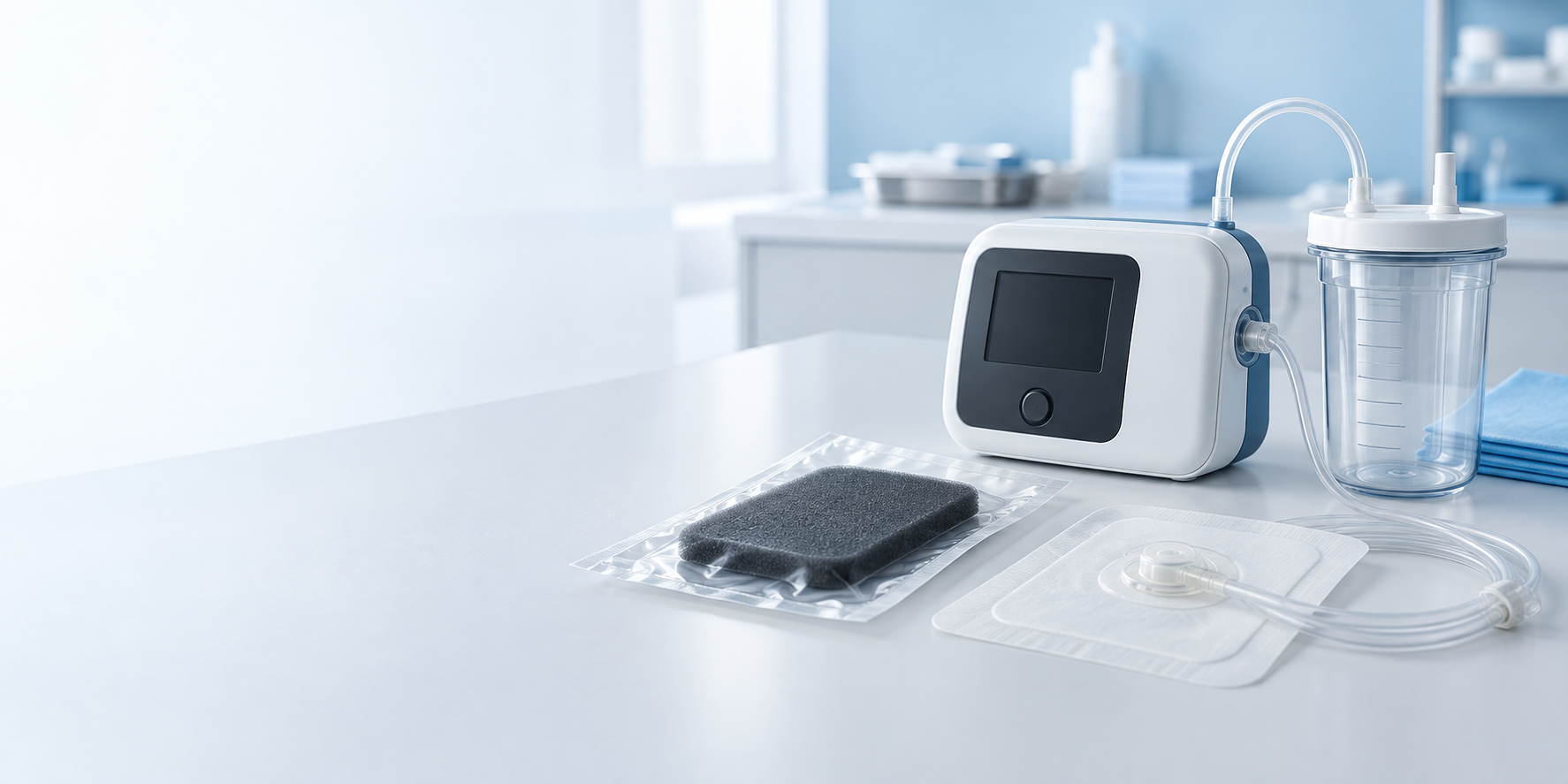
Negative pressure wound therapy (NPWT) uses a sealed wound system to apply controlled negative pressure. Its role depends on the wound, the person, the care setting, and the current IFU. You should not treat NPWT as a universal therapy or a substitute for wound assessment.
What NPWT Is Designed to Do
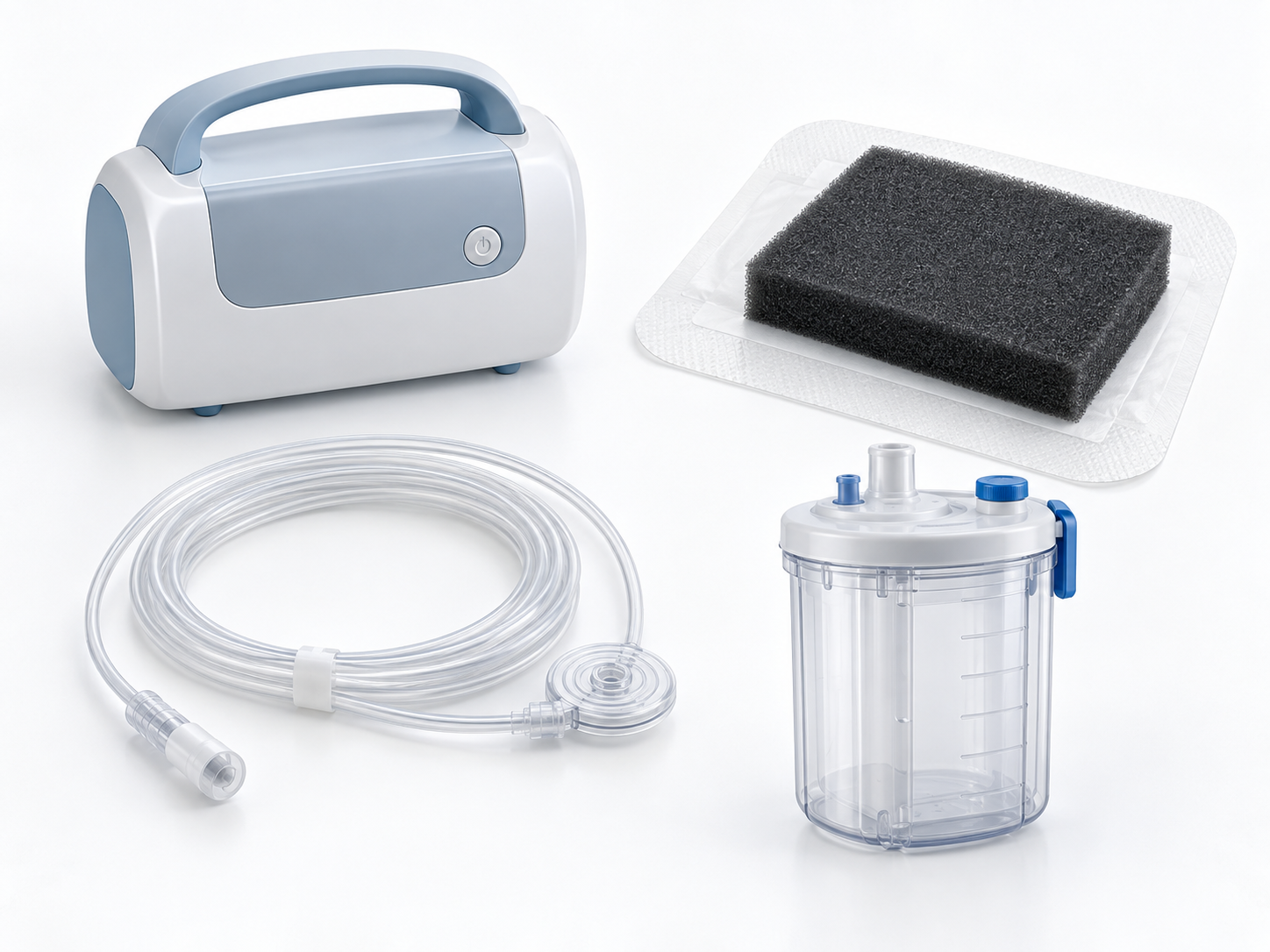
In a device category addressed by FDA guidance for non-powered NPWT suction apparatus, a sealed wound environment is used to remove fluids such as wound exudate. That guidance describes a system that may include a vacuum source, dressing materials, a fluid-removal conduit, and a container for collected material. Its scope is limited to a specific non-powered FDA device category, so it should not be read as the label or regulatory status of every NPWT system.
For a buyer, this is the practical takeaway: NPWT is a system, not only a pump. The therapy pathway may depend on the compatible dressing, interface, tubing, collection component, seals, monitoring features, and the service and training arrangement behind them.
What NPWT Does Not Replace
NPWT does not replace assessment of wound cause, perfusion, infection, bleeding risk, exposed structures, pain, pressure relief or offloading, systemic care, and follow-up. It also does not decide whether debridement is needed or which debridement method is appropriate. Those decisions belong to appropriately qualified clinicians working within local policy.
Open Wounds and Closed Surgical Incisions Are Different Contexts
Open wounds and closed surgical incisions should not be discussed as if they share the same evidence base or product label. The cited Cochrane review of negative-pressure therapy for closed surgical wounds applies to closed incisions after surgery; it does not establish a general benefit for open wounds, pressure ulcers, or every other wound type.
Why Evidence Must Stay Within Its Clinical Context
For diabetes-related foot wounds, IWGDF 2023 distinguishes postsurgical wounds from non-surgically related diabetes foot ulcers in its NPWT recommendations. For chronic stage III or IV pressure ulcers, WHS 2023 gives a specific NPWT recommendation; however, a 2023 Cochrane review found the pressure-ulcer evidence uncertain because studies were small and of very low certainty. Neither source supports treating every wound with NPWT.
What to Check Before Selecting an NPWT System
- Which clinical pathway, care setting and patient population is the system intended to support?
- What does the current IFU say about intended use, contraindications, warnings, accessories, consumables and training?
- Which dressing, tubing, canister or collection components are explicitly approved together?
- How will supply continuity, waste handling, service, monitoring and escalation be managed?
- Which claims, model mapping, registration and market availability need written confirmation?
Questions for Suppliers and Internal Teams
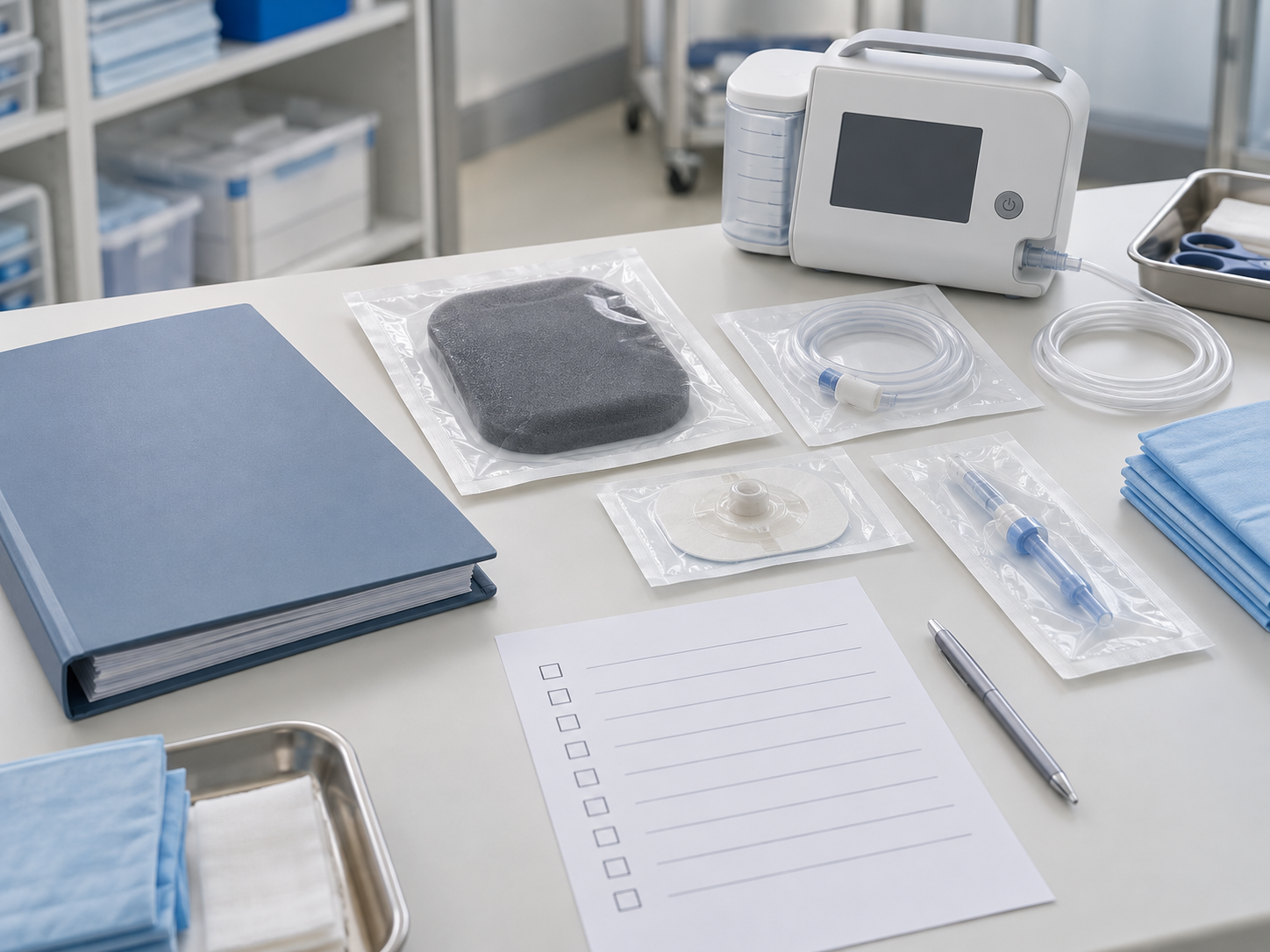
Ask for the current IFU, a configuration list mapping each accessory to the proposed device, product identifiers, training and service responsibilities, and market-specific documentation. Do not infer compatibility from appearance, a connector shape, or an older brochure.
Frequently Asked Questions
Is NPWT the Same as a Wound Vacuum?
“Wound vacuum” is often used informally. For procurement, use formal device documentation because components, labels, accessories and intended use vary by system and market.
Does Every NPWT System Use the Same Dressings and Canisters?
No. Confirm compatibility in current manufacturer documentation for the specific system and market.
Can a Supplier Recommend NPWT for a Particular Patient?
Product information can support procurement planning, but patient-specific selection requires appropriately qualified clinical judgment and local procedures.
Does NPWT Replace Debridement?
No. NPWT and debridement are different clinical decisions. The care plan depends on assessment by the responsible team.
What Is the Most Important Document to Request Before Purchase?
Start with the current IFU for the exact model and market, then verify approved accessories, consumables, training, service and product identifiers.
Final Thoughts
NPWT is best evaluated as a documented clinical pathway with a compatible device and supply configuration—not as a pump alone. Explore LLK Medical or contact our support team for product-documentation and configuration questions.
Sources
- FDA: Non-powered Suction Apparatus Device Intended for NPWT — Class II Special Controls Guidance
- International Working Group on the Diabetic Foot: IWGDF Guidelines 2023 — Recommendations 28 and 28a
- Wound Healing Society: WHS Guidelines for the Treatment of Pressure Ulcers — 2023 update
- Cochrane: Negative Pressure Wound Therapy for Treating Pressure Ulcers (2023)
- Cochrane: Negative Pressure Therapy for Closed Surgical Wounds