


NPWT With Instillation: How It Differs From Standard NPWT
NPWT with instillation adds planned fluid delivery, dwell and removal phases to negative-pressure wound therapy. Standard NPWT primarily applies negative pressure within a sealed wound system. You should compare intended use, IFU, compatible components, evidence and pathway—not assume every device has this function.
The Core Difference
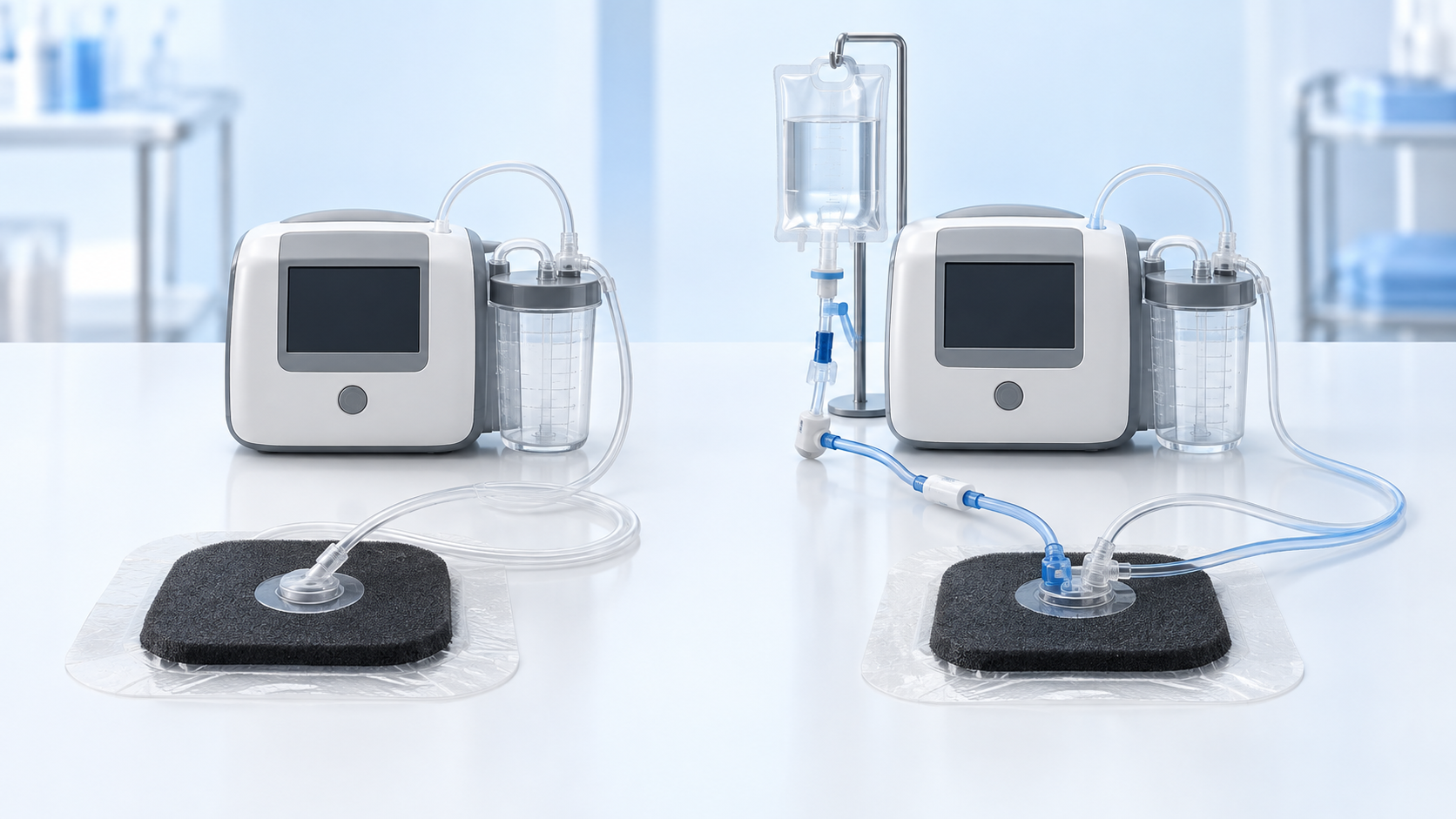
Standard NPWT is a negative-pressure system used within a sealed wound environment. NPWT with instillation and dwell time, often shortened to NPWTi-d, adds periodic delivery of a topical solution, a dwell phase, and a subsequent negative-pressure phase. The 2020 international consensus update describes this as a way to combine standard NPWT mechanisms with cyclic cleansing; it is not a claim that every system can deliver fluid or that every wound needs this approach.
Why the Difference Matters for System Selection
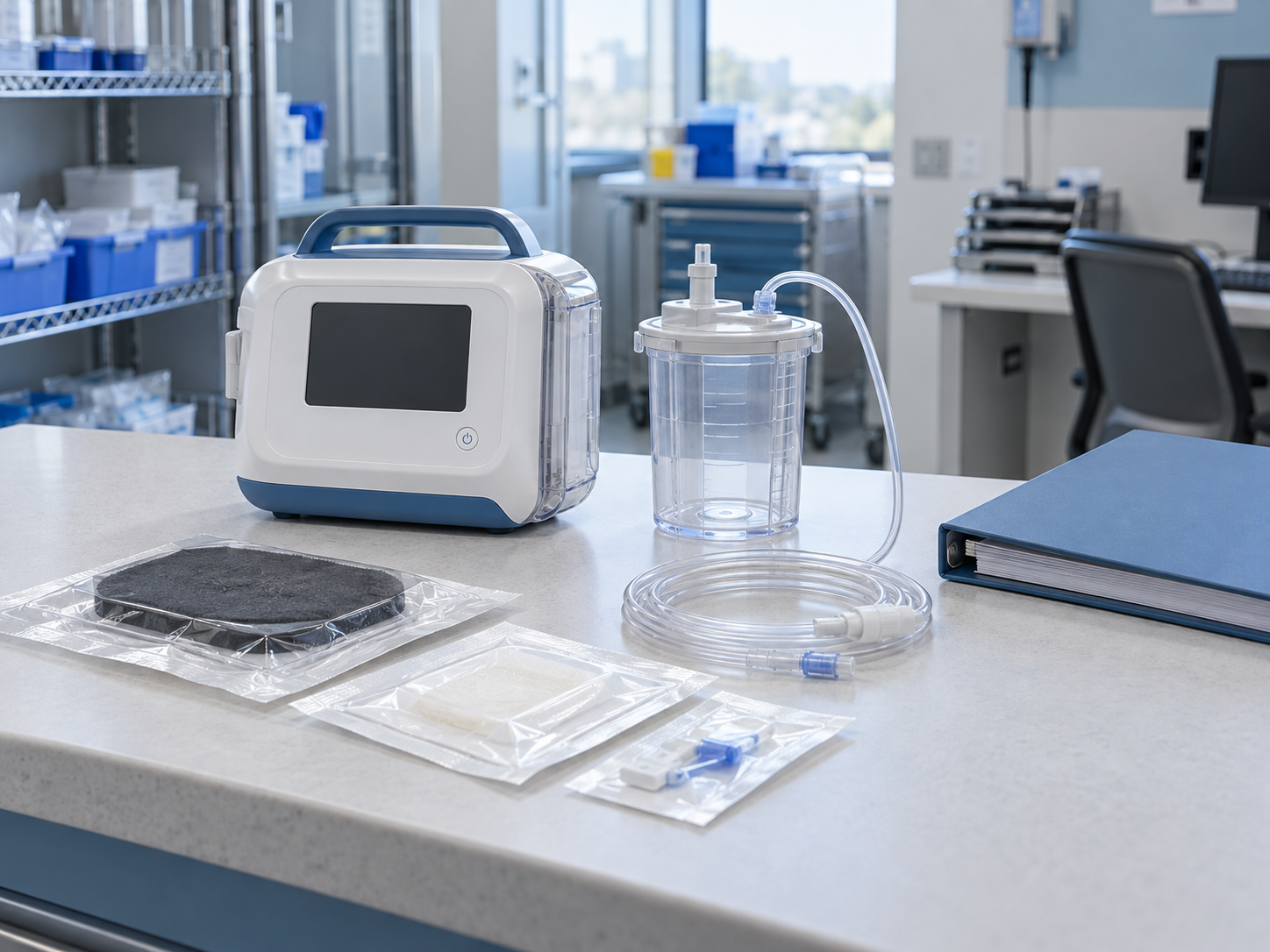
An instillation-capable pathway can require more than a standard negative-pressure pump. Buyers may need to verify the therapy unit, delivery mechanism, dressing and tubing configuration, collection route, approved solutions or fluids, leak management, consumables, training, service arrangements, and local documentation.
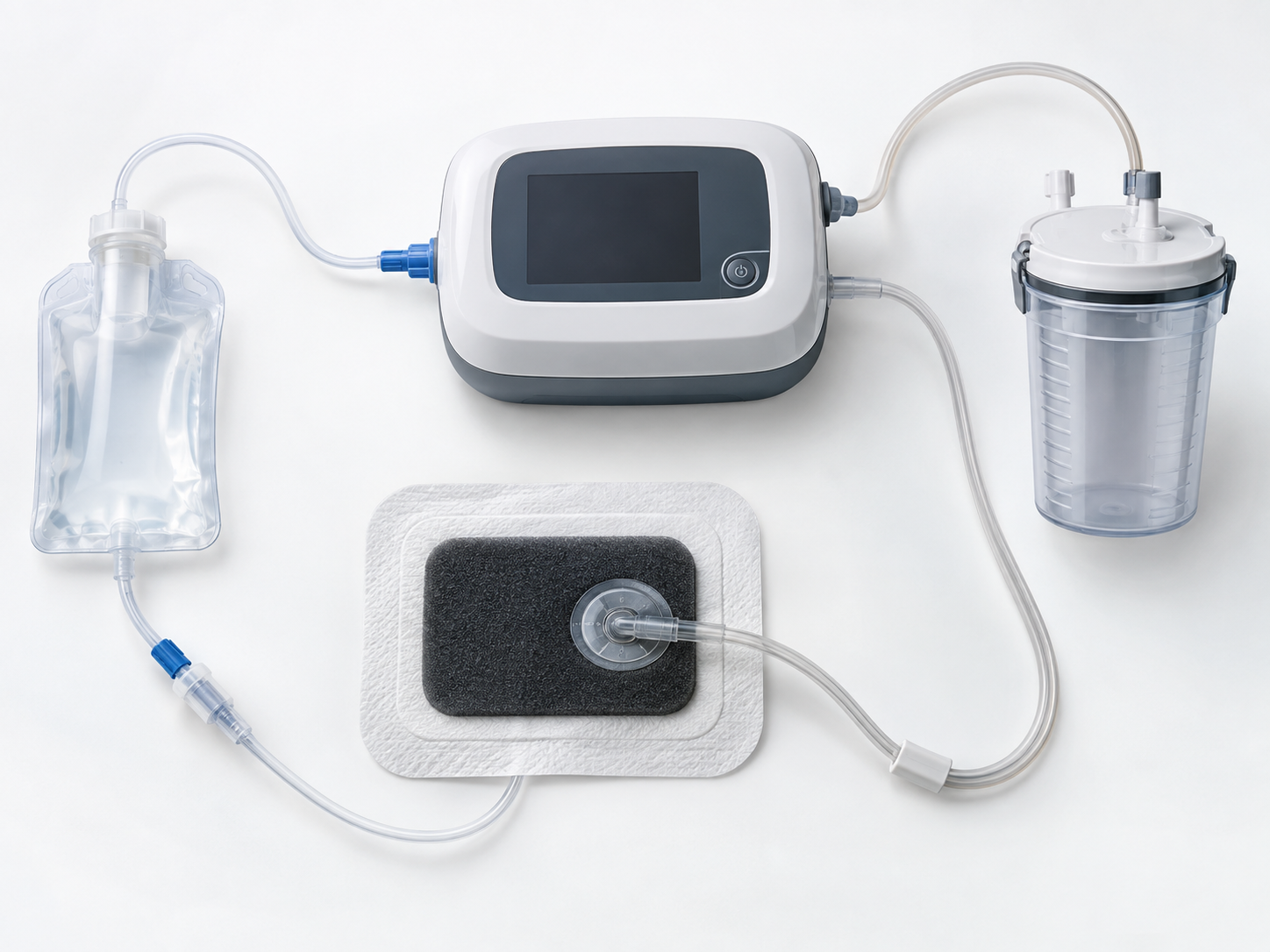
Do not treat a product name, a connector shape, or a general brochure as proof of compatibility. The current IFU for the exact device and market should identify the intended use, warnings, accessories, consumables, and training requirements.
FDA guidance for a specific non-powered NPWT device category likewise illustrates why a system’s components and compatibility must be evaluated together; that document does not define the label of every powered or instillation-capable system.
Instillation Does Not Replace Assessment or Debridement
NPWTi-d should not be presented as a substitute for wound assessment, perfusion review, infection management, haemostasis, debridement decisions, or appropriate surgical care. The consensus update itself describes instillation therapy as an adjunct used with appropriate wound care and notes that it does not replace debridement or surgical care. A product or procurement discussion should keep that boundary explicit.
What the Evidence Can and Cannot Tell You
The cited 2020 document is an expert consensus update—not an independent universal protocol. It was developed around named V.A.C. VERAFLO Therapy and ROCF dressing configurations; the panel was sponsor-selected, and the publication discloses industry relationships. It also states that only a few studies provided comparative data. Use it as context, then confirm the applicable guideline, local policy and IFU for the actual system.
Different wound types, care settings, dressings, solutions, and device designs may have different evidence and labels. You should not transfer an evidence statement for one wound type, device design, or clinical setting to another without qualified clinical review.
A Product-Documentation Example
Current model-specific records support an instillation capability claim only for NP-800. The NP-800/600 manual states that NP-600 is not equipped with the Instillation function, while the NP-100 manual describes negative-pressure drainage modes only. Treat this as a documentation example rather than an inference about other systems. Before purchase or publication, verify the current IFU, exact model, approved accessory configuration, target-market status, and local availability in writing.
Questions to Ask Before Selecting a System
- Is the proposed pathway standard NPWT or an instillation-capable pathway, and what is the documented clinical objective?
- Which exact therapy unit, dressing, tubing, canister, delivery route, and consumables are approved together?
- What current IFU, market-specific label, training and service documentation applies?
- How will supply continuity, disposal, leak response, monitoring, and clinical escalation be managed?
- Which claims, model mappings, registrations, and local availability still need written confirmation?
Frequently Asked Questions
Is NPWTi-d Just Standard NPWT With Extra Fluid?
No. It is a therapy pathway that combines periodic instillation, dwell and negative-pressure phases. Whether a particular device can provide it, and which components or solutions may be used, must be confirmed in its current IFU and local documentation.
Can Any Standard NPWT Pump Be Used for Instillation?
No. Do not infer instillation capability from a pump’s appearance or from the presence of a canister. Confirm the exact model, delivery mechanism, approved consumables and intended use in current manufacturer documentation.
Does Instillation Replace Debridement?
No. The international consensus update treats NPWTi-d as an adjunct to appropriate wound care and states that it does not replace debridement or appropriate surgical care. Clinical assessment remains essential.
Is NPWTi-d Proven Better for Every Wound?
No. Evidence and recommendations depend on the wound type, setting, device design and clinical pathway. The consensus update notes limited comparative data. Avoid universal efficacy claims and verify the relevant evidence and IFU.
What Should a Buyer Ask a Supplier to Provide?
Request the current IFU, exact configuration list, approved accessories and consumables, training and service responsibilities, product identifiers, and market-specific documentation. Ask the supplier to clearly separate confirmed facts from items awaiting manufacturer confirmation.
Final Thoughts
The decision is not simply “standard NPWT versus more features.” It is whether the documented system, compatible components and clinical pathway match the intended setting. Explore LLK Medical or contact the support team for product-documentation and configuration questions.