


Wound Cleansing: Principles, Methods, and Equipment Considerations
Wound cleansing affects the supplies, accessories, and training you need. Your equipment choice should follow the clinical workflow. This guide explains cleansing principles, common methods, and the questions to resolve before comparing configurations.
AI-generated context illustration; not a clinical case or a supplied product kit.
What Is Wound Cleansing?
Wound cleansing removes unwanted surface material from the wound and nearby skin, including loose debris and dressing remnants. Debridement also addresses non-viable tissue; the activities can overlap but are not interchangeable. Irrigation is one cleansing technique. IWII 2025, pp. 6–7
For your purchasing specification, separate three requirements: routine cleansing supplies, equipment for a planned debridement procedure, and waste-fluid collection. A product described as a “wound cleaning system” does not automatically meet all three.
Wound Cleansing Principles
Start With the Clinical Assessment
The IWII consensus recommends choosing the solution and technique according to the wound, infection risk, surrounding skin, pain, and available resources. Its guidance combines evidence review with expert consensus; it is not proof of a particular device’s effectiveness. IWII 2025, pp. 4–5
Before requesting a quotation, ask your clinical team to define the care setting and required procedure. You can then identify the consumables, handling controls, training, and documentation needed to support it.
Minimize Avoidable Trauma
For pressure injuries, WHS Guideline 4.5 recommends cleansing at initial care and dressing changes while limiting chemical and mechanical injury. It favors a pH-balanced, non-irritating, non-toxic solution. This is pressure-injury guidance, not a universal protocol for every wound. WHS 2023 Update, Guideline 4.5
When comparing equipment, separate its technical operating range from the clinical settings selected for a patient. A higher maximum output is not, by itself, a reason to choose one system over another.
Plan the Surrounding Workflow
Ask how your team will prepare supplies, manage splashes, collect waste fluid, and dispose of used items. Confirm which tasks require single-use components and which reusable parts need validated reprocessing.
Your specification should also identify who will train staff, maintain equipment, and provide clinical escalation support. Equipment documentation cannot replace a clinical assessment.
Common Wound Cleansing Methods
Irrigation, swabbing, and selected soak or compress techniques appear in the IWII consensus. Their inclusion does not mean they are interchangeable or appropriate for every wound. IWII 2025, pp. 31–36
| Method | What You May Need to Source | What to Confirm |
|---|---|---|
| Irrigation or flushing | Solution container, delivery accessory, protective items, and collection supplies | The specified delivery system, fluid path, handling requirements, and waste arrangement |
| Wiping or swabbing | Gauze or swabs and the selected cleansing solution | Material, pack size, sterile status, and the local procedure |
| A specified soak or compress technique | The designated solution and suitable contact or containment materials | The exact method in the clinical protocol; do not substitute immersion for a compress or infer a contact time |
This table helps you organize a supply request. It does not prescribe a technique, solution, duration, or pressure.
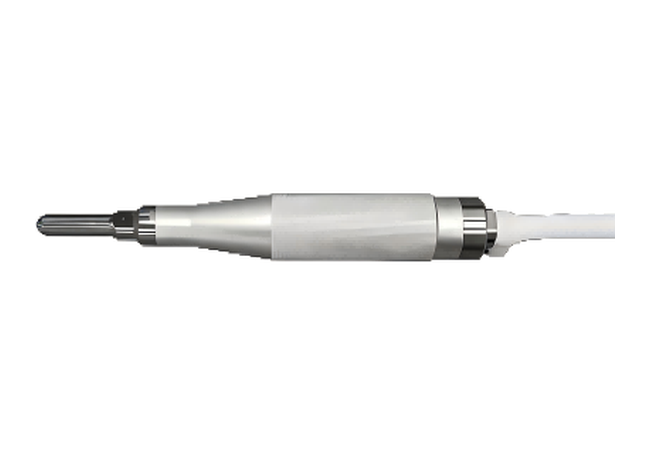
Flushing handpiece detail. This cropped view does not show a complete tubing set or confirm the contents of a quotation.
Equipment Considerations
Fluids and Containers
Evaluate traceability, package integrity, storage conditions, expiry control, and container size. Obtain the solution’s instructions for use and confirm its role with the clinical team before including it in a kit.
For pressure ulcers, WHS Guideline 4.5 reports insufficient evidence to prefer a particular wound cleanser over another. This does not establish that all solutions are equivalent for every wound or infection-management need. WHS 2023 Update, Guideline 4.5
Delivery and Collection
Look beyond the main unit or bottle. List the delivery accessory, tubing, protective materials, collection components, and disposal arrangements separately.
For multiple facilities, you can compare a small number of documented configurations. Record which items are shared and which depend on the clinical service or installed device. Do not assume that similarly shaped connectors are compatible.
Gauze, Swabs, and Ancillary Items
Ask for the material, lint characteristics, absorbency information, pack count, sterile status, shelf life, and packaging format. Then compare these details against your handling and replenishment requirements.
These are purchasing attributes. They do not, on their own, establish clinical superiority or justify replacing the items specified in your protocol.
Device-Assisted Procedures
A clinical service may also need a device for debridement, flushing, or collection. Confirm the intended use and functions of the selected configuration before comparing prices. A debridement workstation is not required for every routine cleansing task.
In the CareMaster A5 manual, the system description distinguishes ultrasonic debridement, flushing, and suction for collecting waste fluid. The accessory tables identify flushing components for E/G and suction-trolley components for E. Treat these as a documented configuration example; confirm the current supplied model and component list before ordering.
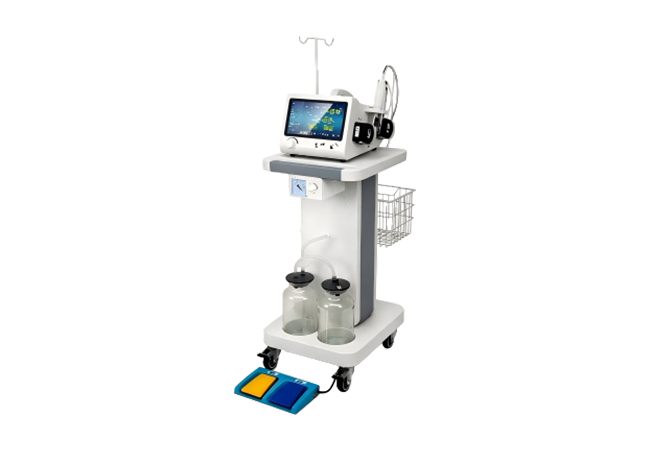
CareMaster-E equipment example. Appearance does not establish an approved indication, accessory compatibility, or the supplied configuration.
Waste-fluid suction during a procedure should not be described as negative pressure wound therapy (NPWT). The function recorded here is collection during debridement or flushing, not a claim that the system delivers NPWT through a sealed dressing.
The internal product reference for these statements is the CareMaster-E/G/H User Manual, A5, September 2022, sections 2.2–2.3. Request the current model-specific IFU, matching accessories, reprocessing requirements, training, service terms, and destination-market documentation.
A Practical Purchasing Checklist
AI-generated procurement illustration; pictured samples do not establish compatibility or supplied contents.
Before approving your wound-cleansing configuration, confirm:
- Clinical scope: the care setting, planned procedure, and responsible clinical team.
- Supplied scope: the main unit, accessories, consumables, and excluded items.
- Documentation: current IFUs, traceability, expiry information, and required market documents.
- Compatibility: approved part numbers for the selected device and fluid path.
- Handling: splash protection, collection, disposal, and reprocessing arrangements.
- Ongoing support: replacement stock, staff training, servicing, and written commercial terms.
Acute-care, outpatient, and community services may have different storage, transport, staffing, and waste arrangements. Ask whether the proposed products and their intended-use documentation fit the actual setting.
Frequently Asked Questions
What Should You Include in a Request for Quotation?
State your facility type, required functions, destination market, expected order quantities, and documentation needs. For an installed system, add its model and the part numbers you need. Ask the supplier to separate included equipment, consumables, optional items, and service charges.
Can You Select Replacement Tubes by Appearance?
No. Match the device and part number to the current accessory documentation. CareMaster A5 section 8.3 cautions against non-matching replacement parts. A similar connector or product photograph is not sufficient evidence of compatibility.
Does Waste-Fluid Suction Mean the System Provides NPWT?
No. In the CareMaster example, suction collects waste fluid during the procedure. You should request separate intended-use documentation for any proposed NPWT system rather than treating all negative-pressure functions as the same treatment.
What Should You Check for Reusable Accessories?
Request the item-specific cleaning, disinfection, or sterilization instructions, any reuse limits, and the stated replacement criteria. Confirm that your facility can follow those instructions. Do not assume every handpiece, tube, or probe follows the same reprocessing method.
How Can You Compare Offers With Different Included Items?
Use a line-by-line comparison of the main unit, required accessories, starter consumables, replacement items, training, and servicing. Ask each supplier to identify exclusions. A lower main-unit price may leave part of your required configuration unquoted.
Final Thoughts
Define your cleansing workflow before comparing equipment. Match supplies, accessories, and documentation to that scope. Review the CareMaster configuration range, then contact PROMED with your required functions, facility setting, and destination market.
References
- International Wound Infection Institute. Therapeutic Wound and Skin Cleansing: Clinical Evidence and Recommendations. Wounds International, 2025. Pages 4–7 and 31–36. Consensus document.
- Gould et al. WHS Guidelines for the Treatment of Pressure Ulcers—2023 Update. Guideline 4.5; first published in 2023, journal issue 2024. Publisher reference.
- CareMaster-E/G/H Wound Clean System User Manual, version A5, September 2022. Sections 1.2, 2.2–2.3 and 8.3. Manufacturer document reviewed for the equipment example; request the current applicable version before purchasing.
Sources checked on 26 September 2026. This article supports professional procurement planning and does not replace clinical assessment, local policy, or product instructions.