


Wound Biofilm: What It Is and Why It Matters in Wound Care
Wound biofilm is a microbial community attached to a surface within a self-produced matrix. In a chronic or nonhealing wound, it can complicate clinical decision-making. You cannot confirm it from one visual sign or solve it by buying one product.
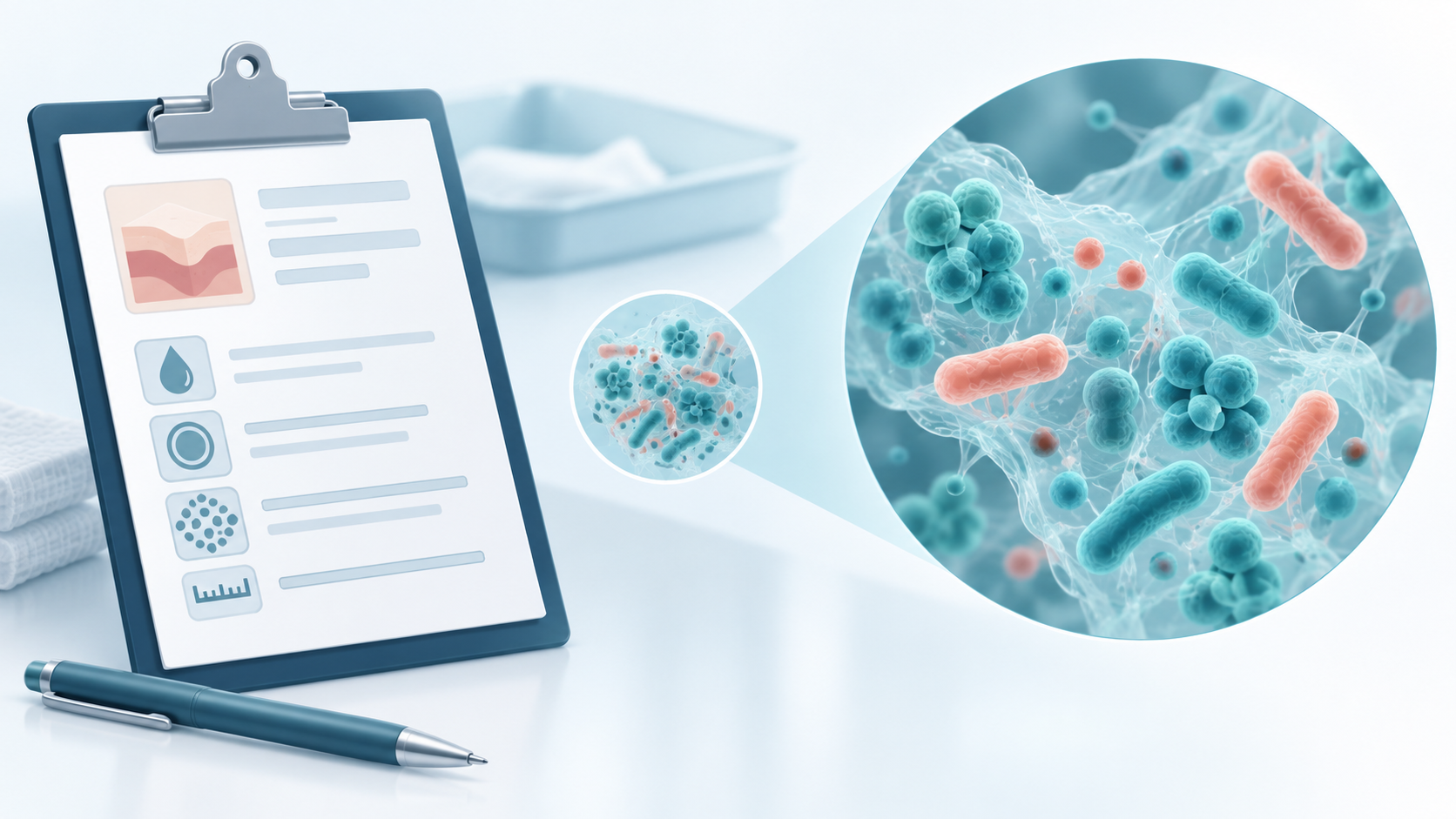
*AI-generated educational illustration. It does not diagnose biofilm, represent a patient or wound, show a real product, or establish a treatment or antimicrobial outcome.`
What Wound Biofilm Means
Microorganisms can exist as individual cells or as organised communities. A biofilm is the latter: organisms attach to a surface and become embedded in a protective matrix. This can make the community behave differently from free-floating organisms and may complicate efforts to manage microbial burden.
For procurement teams, the important point is scope. “Biofilm” is not a generic synonym for dirt, slough, infection, or delayed healing. It is a specific concept within wound microbiology. A product description that uses the word without defining the evidence, intended use, and clinical pathway can create an unsafe expectation.
Biofilm Is Not the Same as Infection
A wound can contain microorganisms without meeting clinical criteria for infection. Likewise, a delayed or deteriorating wound may have several contributing factors, such as perfusion, pressure, oedema, systemic illness, non-viable tissue, or inadequate protection. Biofilm may be considered within a wider assessment, but it should not become a catch-all explanation.
The International Wound Infection Institute’s 2022 consensus update places biofilm within a broader infection-management framework that includes assessment, cleansing, debridement, and antimicrobial stewardship. That is a useful boundary for buyers: equipment and consumables support a documented pathway; they do not make an infection or biofilm diagnosis.
Why Visual Clues Are Not Enough
The literature discusses clinical indicators that may raise suspicion in a chronic nonhealing wound, but there is no simple visual test that confirms biofilm at the bedside in every case. The Global Wound Biofilm Expert Panel also noted limitations in human clinical evidence and diagnostic options.
That uncertainty should affect how a supplier communicates. Avoid statements such as “this device detects biofilm” or “this dressing removes biofilm” unless the exact, current product documentation supports that claim for the target market. A general photograph, an in-vitro result, or a comparison with another model is not enough.
Where Cleansing and Debridement Fit
Clinical teams may use cleansing and, when indicated, debridement as part of overall wound management. These activities have different purposes. Cleansing generally addresses loose surface material and the care environment. Debridement is a clinically selected method for non-viable tissue or unwanted material. Neither term should be used as a universal promise that biofilm has been eliminated.
The 2017 biofilm consensus includes mechanical debridement and topical approaches among the subjects considered. It is an expert consensus document, not a single protocol applicable to every wound, care setting, device, or solution. The right method depends on assessment, clinician capability, local policy, risks, and the documented intended use of the tools involved.
Questions to Ask Before Selecting Supplies
1. What wound-care pathway and infection-prevention policy applies in the intended setting?
2. Which clinical assessment findings and escalation rules are documented by the responsible team?
3. What is the exact intended use, IFU, training requirement, and accessory list for each proposed item?
4. Are any “antibiofilm” statements supported by current, market-specific evidence and labelling?
5. How will traceability, waste handling, service, and supply continuity be managed?
Frequently Asked Questions
Is wound biofilm the same as infection?
No. Biofilm and infection are related but distinct concepts. Infection assessment requires the clinical context and an appropriate local pathway.
Can a wound be diagnosed with biofilm by appearance alone?
No. Clinical indicators may support suspicion, but a single visual feature is not universal confirmation.
Does irrigation remove biofilm?
Irrigation can support a planned cleansing workflow, but it is not proof that biofilm has been removed. The method and its role must follow clinical assessment and local protocol.
Is debridement always required when biofilm is suspected?
No universal rule applies. Method selection and timing require qualified clinical assessment, taking account of tissue, perfusion, pain, bleeding risk, goals of care, and local policy.
What evidence should a supplier provide?
Ask for the current IFU, intended use, product identifiers, market documentation, compatible consumables, training scope, and the specific evidence supporting any biofilm-related claim.
Final Thoughts
Biofilm is a reason to improve the quality of questions, not to make broader product promises. Start with the clinical pathway and current documentation, then select traceable supplies that support it. [Contact LLK Medical](https://llkmedical.com/support/) for documentation and configuration questions.
Sources
– Schultz et al. Consensus guidelines for the identification and treatment of biofilms in chronic nonhealing wounds
– International Wound Infection Institute, Wound Infection in Clinical Practice: 2022 update
*For professional education and procurement planning only; not an individual patient-care instruction.*