


Patient Monitoring & Diagnostic Equipment
Find the right equipment category for your next clinical procurement project.
– ECG recording and report workflows
– Multi-parameter and maternal-fetal monitoring
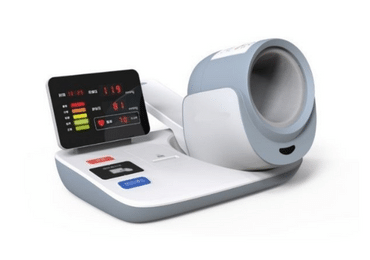
– Arm-tunnel blood pressure measurement
Patient Monitoring and Diagnostic Equipment
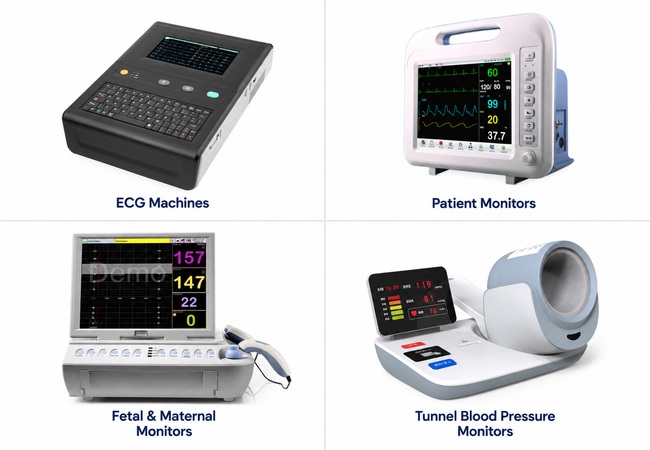
Explore patient monitoring and diagnostic equipment with PROMED, a medical equipment supplier. This category groups ECG machines, patient monitors, fetal and maternal monitors, and tunnel blood pressure monitors for clearer procurement planning. Start with the task your team needs to perform, then review the appropriate category before requesting a model-specific quotation. Keep your required measurements, recording needs, accessories, and installation conditions together so you can compare complete configurations, not just device names. These categories serve different purposes and are not interchangeable. Available models, included functions, documentation, and commercial terms must be confirmed for your proposed order and destination market.
Explore Your Equipment Options
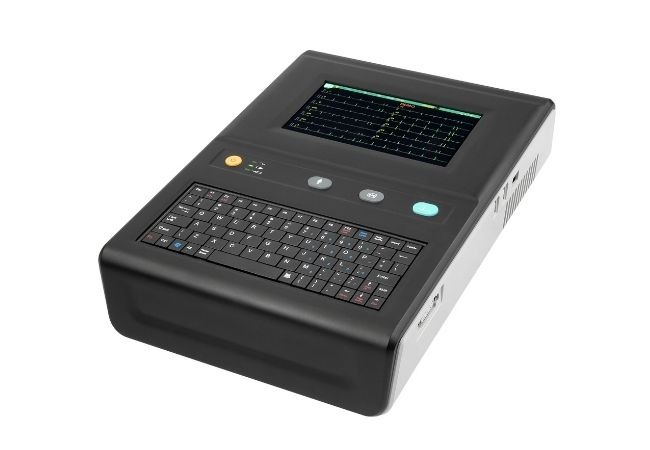
Compare lead configuration, recording layout, and report output to shortlist equipment for your ECG acquisition and documentation requirements before ordering.
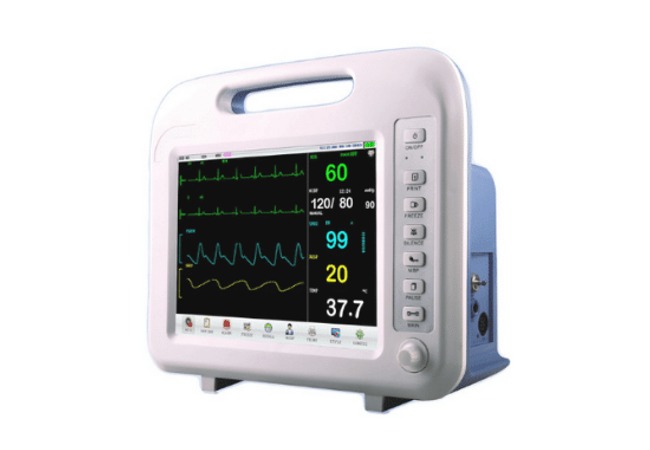
Start with your required monitoring parameters, patient population, and accessories to identify the appropriate configuration for your intended clinical workflow.
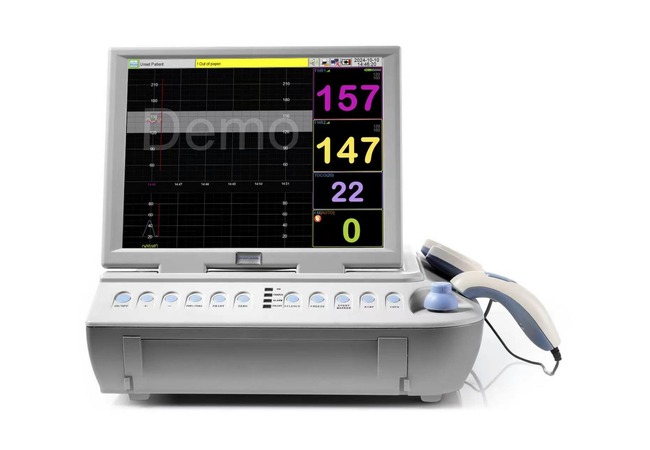
Compare fetal monitoring configurations and maternal parameter requirements, then specify the channels, probes, and recording options needed for your enquiry.
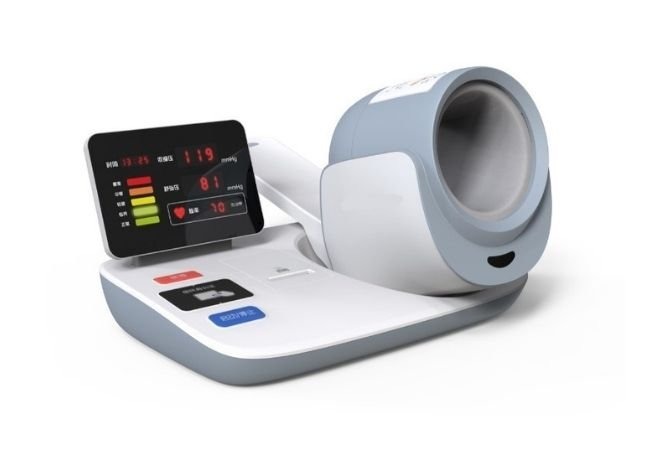
Review arm fit, measurement station layout, and recording requirements to select a starting point for your blood pressure equipment enquiry.
What to Confirm by Category
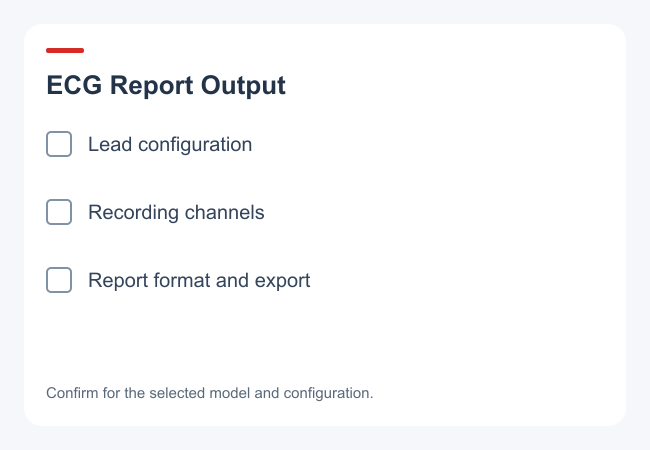 For your chosen ECG model, confirm the recording layout and report outputs your team needs.
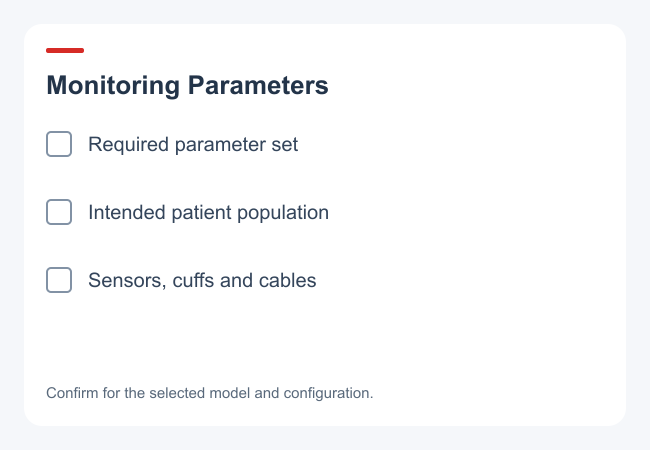 For your selected patient monitor, confirm the required parameter combination and its corresponding sensors and accessories.
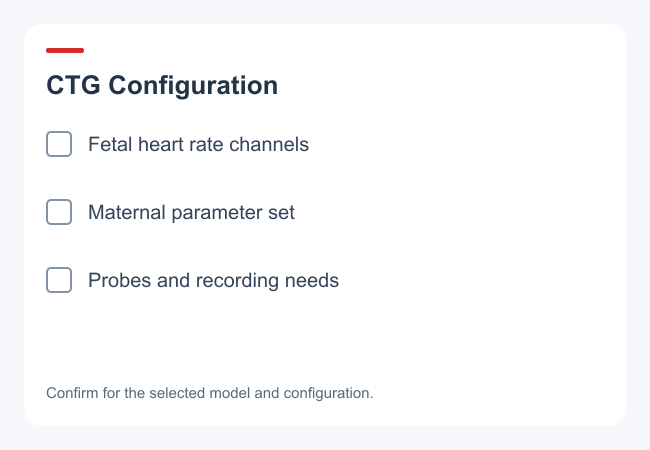 For your chosen CTG configuration, confirm fetal channels and whether maternal monitoring parameters are included.
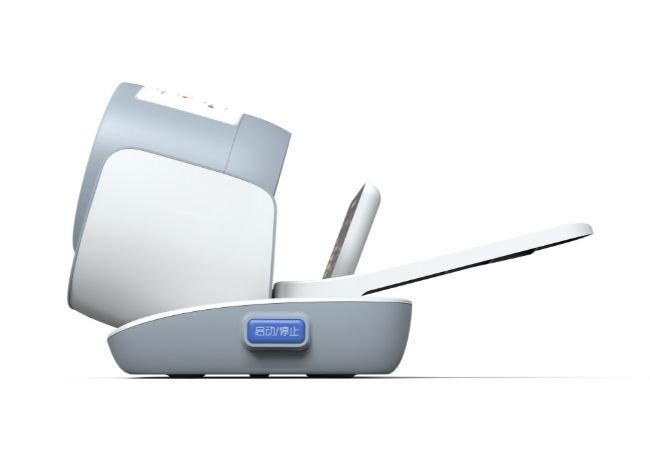
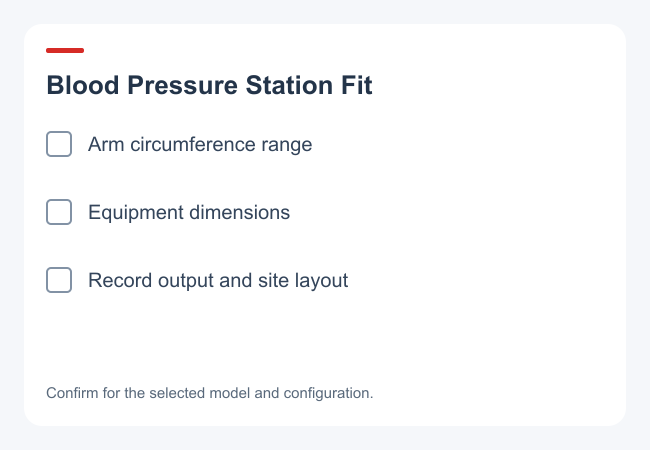 For your selected tunnel monitor, confirm arm fit and equipment dimensions against your planned station layout.
Specifications to Confirm Before Comparing Quotations
Use this table to describe your requirements. It does not list confirmed specifications or standard accessories.
| Equipment Category | Specifications to Confirm | Accessories or Options to Clarify |
|---|---|---|
| ECG Machines | Lead configuration, recording channels, report format | Patient cable, electrodes, printer, paper, export options |
| Patient Monitors | Parameter set, intended patient population, display needs | Sensors, cuffs, cables, mounting, recorder options |
| Fetal & Maternal Monitors | Fetal heart rate channels, maternal parameter set, recording needs | Fetal and TOCO probes, event marker, paper, software options |
| Tunnel Blood Pressure Monitors | Arm circumference range, equipment dimensions, record output | Station furniture, print supplies, interface documentation |
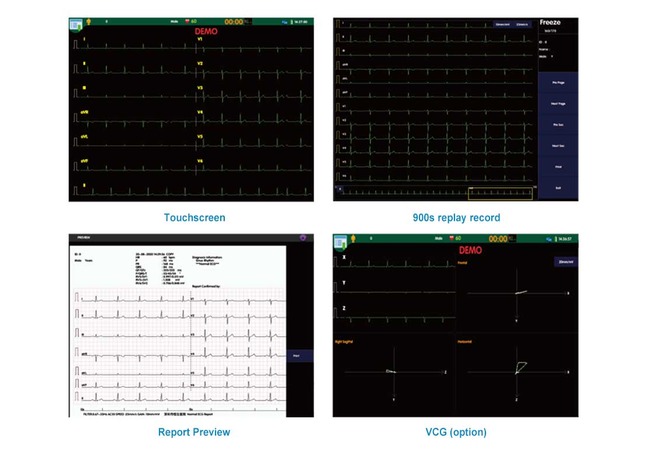
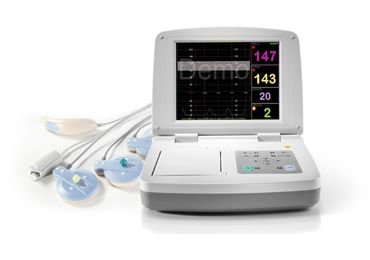
ECG device interface and report examples from the existing product page
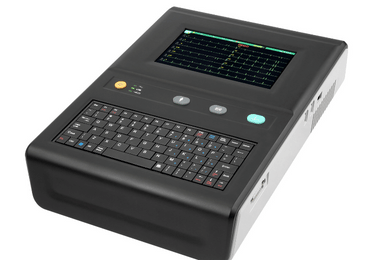
For ECG machines, define what happens after the recording: paper review, file storage, or transfer to another system. Lead configuration and printed channel layout are separate specifications, so list both in your enquiry. Ask to review an example output from the proposed model before comparing quotations. This helps you identify the recording and reporting configuration your team actually needs.
Match Monitoring Parameters to Your Requirements
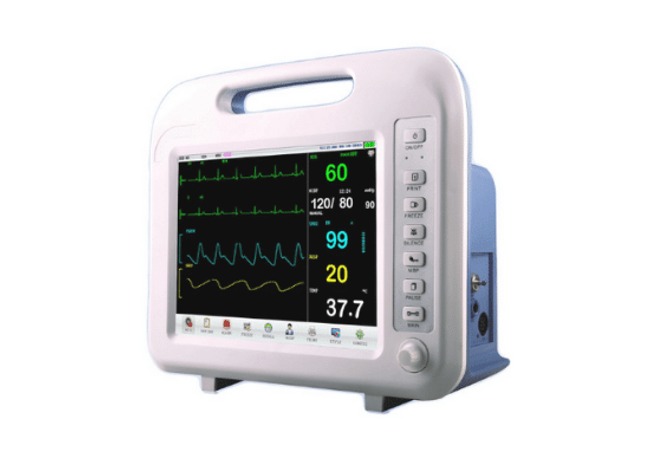
For patient monitors, start with a list of required measurements rather than screen size alone. A unit configured for blood pressure, oxygen saturation, and temperature is not automatically equivalent to one that includes ECG and respiration. State the intended patient population and request a matching accessory list. You can then compare configurations without assuming that similar-looking monitors include the same measurement modules.
Specify the CTG Configuration You Need
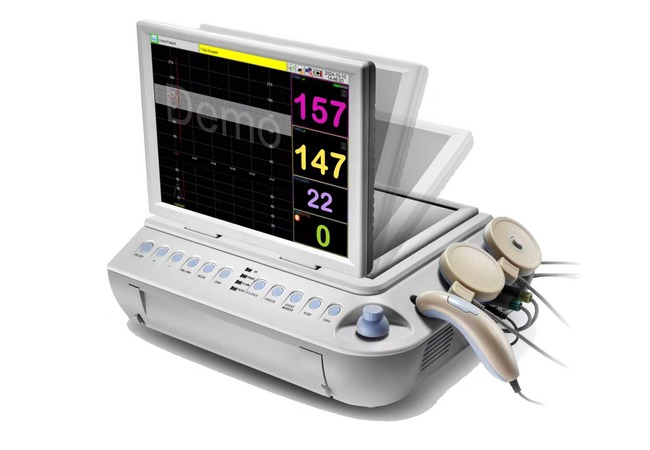
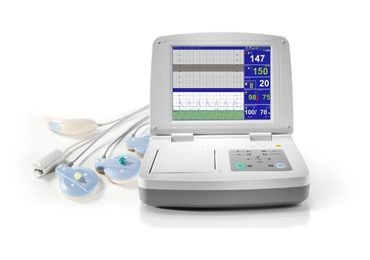
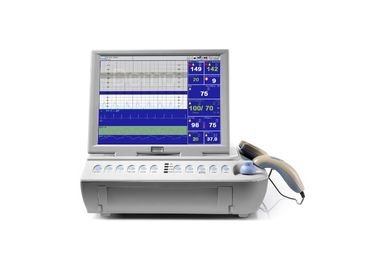
When comparing fetal and maternal monitors, distinguish fetal monitoring from configurations that also include maternal parameters. State the fetal heart rate channels and maternal measurements required by your clinical team. Touch control, wireless probes, and analysis software should be checked separately against the proposed configuration. You can then identify which functions and accessories belong in the quotation, without treating every brochure option as standard.
Plan the Blood Pressure Station Before Ordering
For tunnel blood pressure monitors, consider the station as well as the device. Check the stated arm fit against your intended users, then review placement, seating, power access, and how results will be recorded. Identify any furniture or software requirements separately. A clear station plan lets you assess the proposed equipment without assuming that a product photograph shows everything included in the order.
Application and Procurement Scenarios

If you are planning equipment for a clinic, separate ECG recording, patient monitoring, maternal-fetal monitoring, and blood pressure measurement into distinct requirements. Include only the categories your clinical team needs. You can assign a quantity, location, and intended workflow to each item before comparing quotations, keeping optional equipment visible instead of allowing it to become an assumed part of the project.

If you are selecting a distributor range, group these products by buyer requirement instead of treating every monitor as a similar item. Keep ECG machines, patient monitors, CTG monitors, and tunnel blood pressure monitors distinct in your catalogue. Record the model, configuration, and replacement accessory requirements for each proposed line, so your sales team can describe the specific offer more clearly.

For a project covering several locations, prepare an equipment list for each site rather than a single combined quantity. Record which sites need ECG, monitoring, CTG, or blood pressure equipment and whether their requirements differ. You can then request quotations with location-specific quantities and configurations. Keep delivery schedules and any installation or training requirements separate for written confirmation before committing to the purchase.
Related Products
Purchasing Questions
List each category, quantity, and required configuration separately. Ask for minimum order quantities, prices, and availability for each item. Different products may have different delivery schedules and shipping arrangements. Compare the itemized offer before deciding how to place your order; one enquiry does not establish common terms.
Specify the configuration you want to evaluate and agree on evaluation requirements with your clinical or technical team. Confirm sample availability, price, accessories, documentation, and delivery terms before making arrangements. Record any differences between the sample and proposed bulk order instead of assuming they will be identical.
Identify your destination country and proposed model, then request the product documentation and manufacturer details needed for local review. Check model coverage, document holder, and validity rather than relying on catalogue logos. Requirements vary by market; documentation for one device should not be treated as covering all categories.
Provide your receiving system, required data fields, and preferred workflow. Request model-specific interface documentation and software or licensing requirements. Do not assume all four categories connect to one system. Your technical team should review the proposed connection and validation requirements before interoperability becomes part of the purchase agreement.
Provide your receiving system, required data fields, and preferred workflow. Request model-specific interface documentation and software or licensing requirements. Do not assume all four categories connect to one system. Your technical team should review the proposed connection and validation requirements before interoperability becomes part of the purchase agreement.
Include your interface, manual, or labelling requirements as requests for confirmation. Availability can depend on the model, software version, quantity, and destination. Private labelling is not a standard promise. Any proposed branding changes must retain the legal manufacturer information and device identification required for your market.
Request written terms for the main unit, accessories, consumables, and software where applicable. Clarify the service route, replacement-part identifiers, exclusions, and responsibility for transport costs. Do not assume different product lines have identical warranty arrangements. Keep the confirmed terms with each model-specific quotation in your purchasing records.